
Case Studies vs Trade Shows
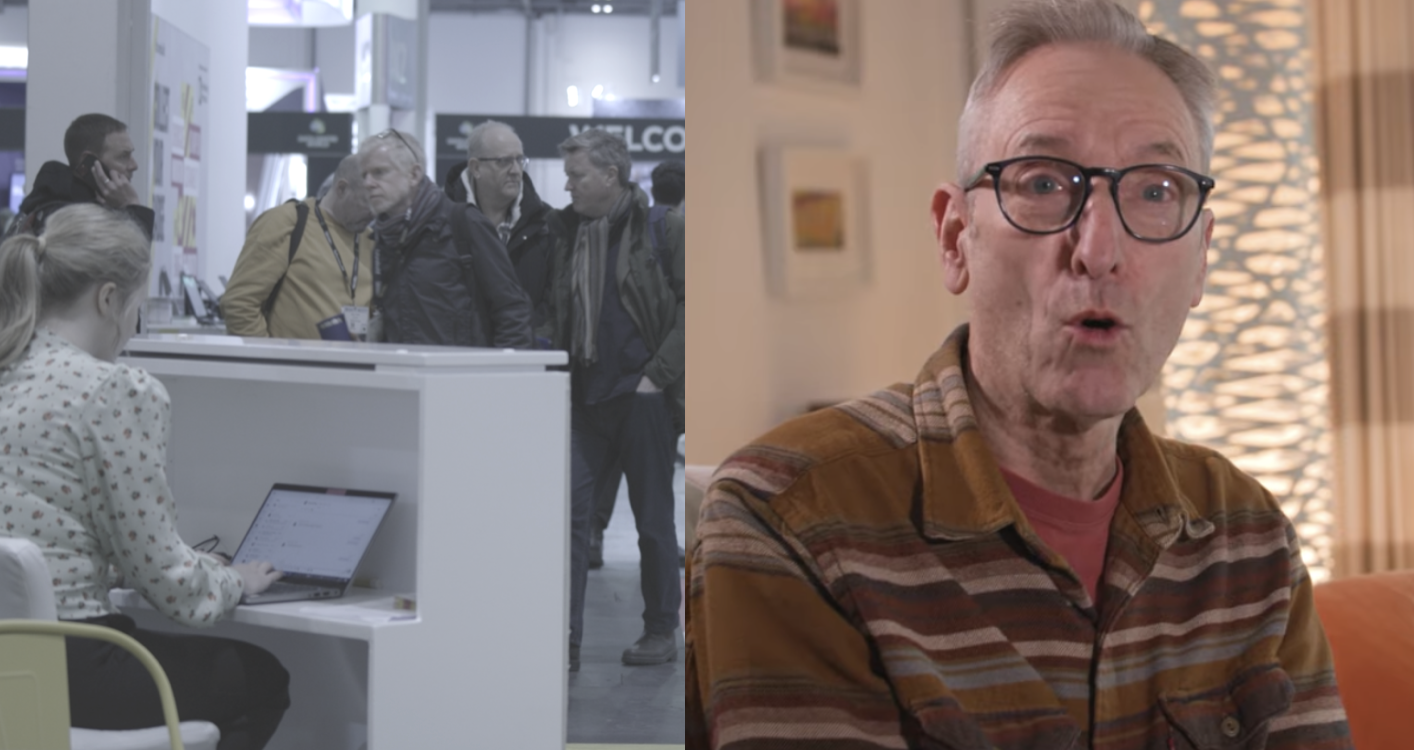
Why £2,000 of Proof Beats £30,000 of Noise
There is a reality at trade shows people choose to ignore.
The carpet has been laid.
The shell scheme walls are up.
The graphics are perfect.
The coffee machine is hissing.
The team is smiling.
And then the doors open.
For three days, thousands of people walk past your stand. Some slow down. Some glance. Some collect a brochure. Some nod politely. A few ask a question.
Most don’t.
Six seconds.
That’s often the interaction window.
Then the show closes. The stand is dismantled. The carpet is rolled up. The £20,000–£30,000 investment vanishes into memory.
And you’re left asking: what did that actually do?
Now compare that to a £2,000 case study.
One film.
One real customer.
One documented problem.
One resolved outcome.
It lives on your website.
It lives in your email footer.
It lives in your sales deck.
It lives in LinkedIn posts.
It lives in Google search.
It lives in procurement conversations.
It lives in inbox follow-ups.
It lives for years.
Which one is infrastructure?
Which one is theatre?
The Economics of Ephemeral vs Enduring
Let’s be blunt.
A trade show is rented attention.
A case study is owned proof.
When you book a stand, you are paying for proximity. You are paying for footfall. You are paying for possibility.
But possibility is not proof.
You might meet 500 people in three days. You might scan 200 badges. You might walk away with 30 “warm” conversations.
Then what?
Follow-up emails.
Phone calls.
Nurture campaigns.
And somewhere in that sequence, a prospective buyer asks:
“Have you done this before?”
That is the moment everything pivots.
If you don’t have proof, you are relying on persuasion.
If you have a case study, you are relying on evidence.
The difference is profound.
The Longevity Equation
One of our ongoing clients said something that stopped us in our tracks:
“Why would I invest in a show stand which people see once, when I can make a case study which will get seen for years?”
It’s not rhetorical.
It’s arithmetic.
A stand exists for 72 hours.
A case study exists indefinitely.
We have produced films that are over 10 years old that are still generating revenue for construction clients.
Ten years.
Think about that.
How many trade shows from 2016 can you even remember?
Now think about a project that transformed a site, solved a technical problem, or delivered measurable performance improvement. If that story is documented well, it compounds in value.
Every new prospect that discovers it experiences it as fresh proof.
The longevity of a case study is not theoretical. It is operational reality.
The AR Demolition Example
Years ago, we produced a case study in the construction sector documenting demolition works at King’s Cross.
It captured:
- The scale of the challenge
- The technical complexity
- The environmental considerations
- The delivery discipline
- The outcome
That film did not vanish after a launch event.
It became part of the company’s sales infrastructure.
It answered objections before they were raised.
It demonstrated competence without bravado.
It replaced “we can” with “we did”.
That single documented project outlived countless exhibitions, countless brochures, and countless sales pitches.
Because when a contractor bids for a major project, decision-makers do not ask how impressive your stand looked in Hall 3.
They ask for precedent.
The AI Era Makes This Even Clearer
We are now living in a moment where AI can generate top-of-funnel content at scale.
Blog posts. Social captions. Thought leadership. Product descriptions. Email campaigns.
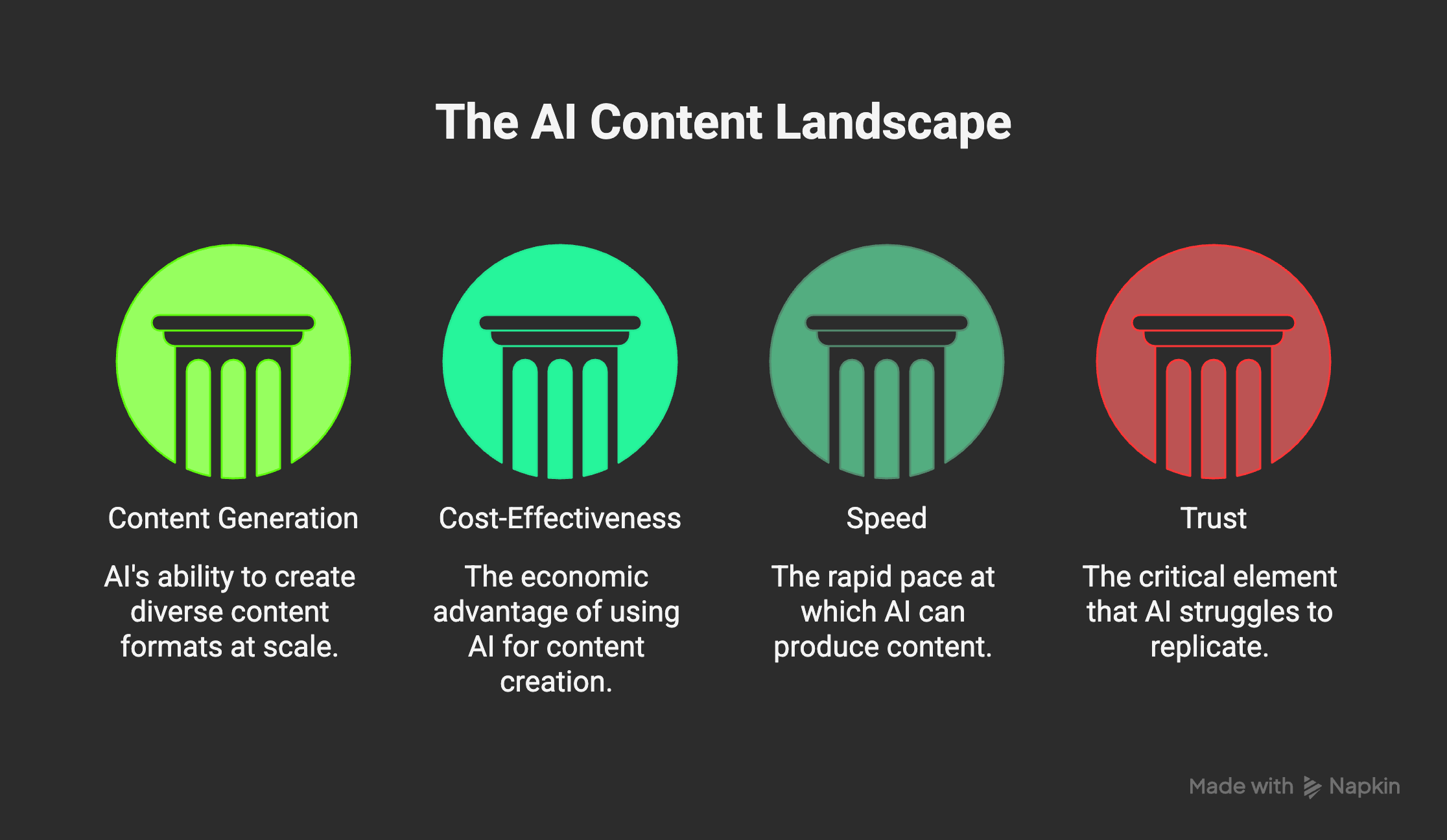
All of it can be created cheaply and quickly.
Top-of-funnel awareness is no longer scarce.
Attention is not the bottleneck.
Trust is.
And trust cannot be synthetically generated.
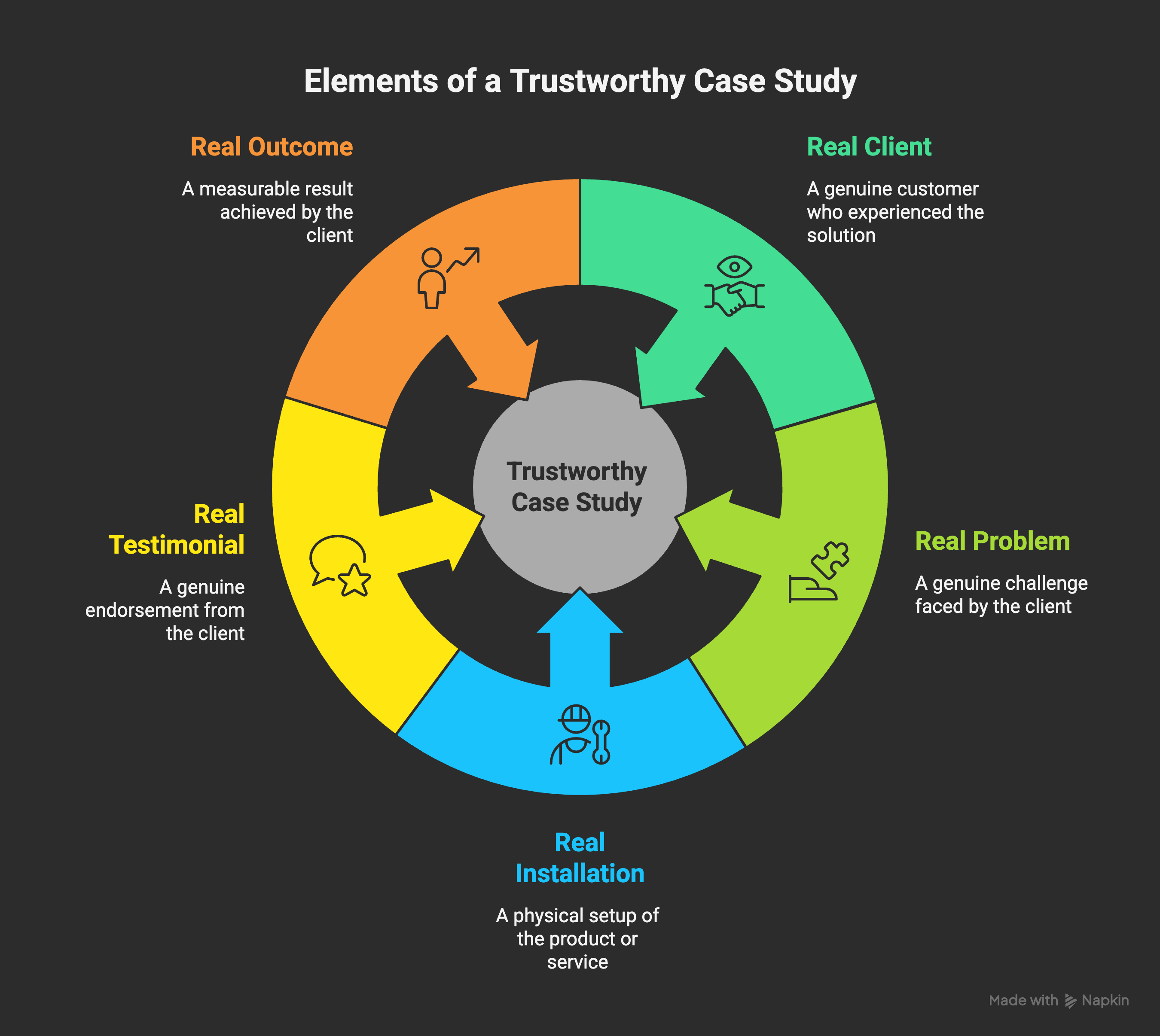
A case study cannot be faked by AI in any meaningful way. It requires:
- A real client
- A real problem
- A real installation
- A real testimonial
- A real outcome
It is a witness statement.
It is a record of lived experience.
It captures tone of voice, hesitation, pride, nuance, relief.
Human beings trust other human beings.
They do not trust explainers.
They do not trust lectures.
They do not trust self-congratulation.
They trust stories that mirror their own fears.
The Structure That Converts
Every effective case study follows a fundamental human pattern:
- The Problem
- The Decision
- The Outcome
That structure is older than marketing. It is how people process reality.
In B2B, especially in technical sectors like construction, retrofit, engineering, manufacturing, and infrastructure, buyers are risk-averse.
They are not buying novelty.
They are buying reduction of uncertainty.
A trade show stand says:
“Here we are.”
A case study says:
“Here is what happened when someone like you trusted us.”
That difference is not cosmetic. It is commercial.
Pound for Pound
Let’s talk return on investment.
The latest commission from Ethan Wadsworth at Discrete Heat - "Better than an exhibition stand - any day"
A modestly priced case study at £2,000 needs to generate what to break even?
One small job?
Two medium jobs?
A single specification?
As Ethan Wadsworth put it recently:
“The return on investment from a case study is almost immediate. We only have to have a couple of jobs closed, and that case study has paid for itself. A stand at a show is dead money. Which one do you think I’m going to choose?” Ethan Wadsworth Head of Marketing Discrete Heat
That statement cuts through the fog.
Trade shows are sunk cost the moment they end.
Case studies are assets.
Assets appreciate.
Assets compound.
Assets are reused.
A single well-crafted case study can be:
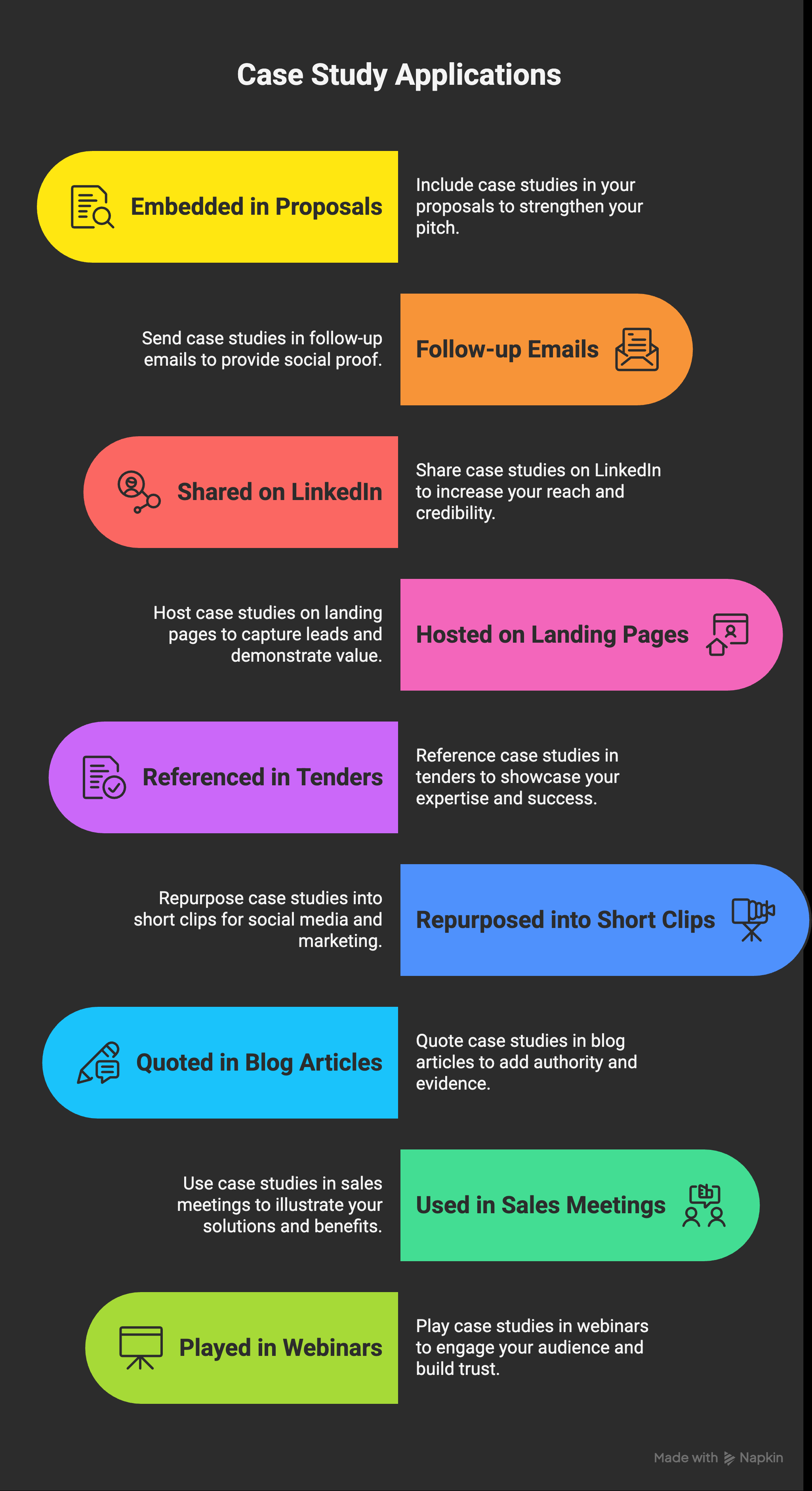
It is not a one-off activation.
It is infrastructure.
The Attention Illusion
Trade shows create a powerful illusion.
Crowds feel like momentum.
Busy stands feel like success.
Badge scans feel like progress.
But noise is not the same as demand.
In many sectors, the majority of footfall consists of:
- Competitors
- Students
- Suppliers
- Casual browsers
- Early-stage researchers
- “Tire kickers”
Serious buyers do attend. Of course they do.
But serious buyers do not convert because they saw a logo once across an aisle.
They convert because they found proof.
In reality, most trade show conversations move prospects into a research phase.
And where do they research?
Online.
Which asset serves you better in that moment?
A memory of a stand?
Or a clear, credible case study answering their exact concern?
Case Studies as Compounding Trust
Trust compounds over time.
When someone discovers your brand through search, through a referral, or through social media, they often follow a path:
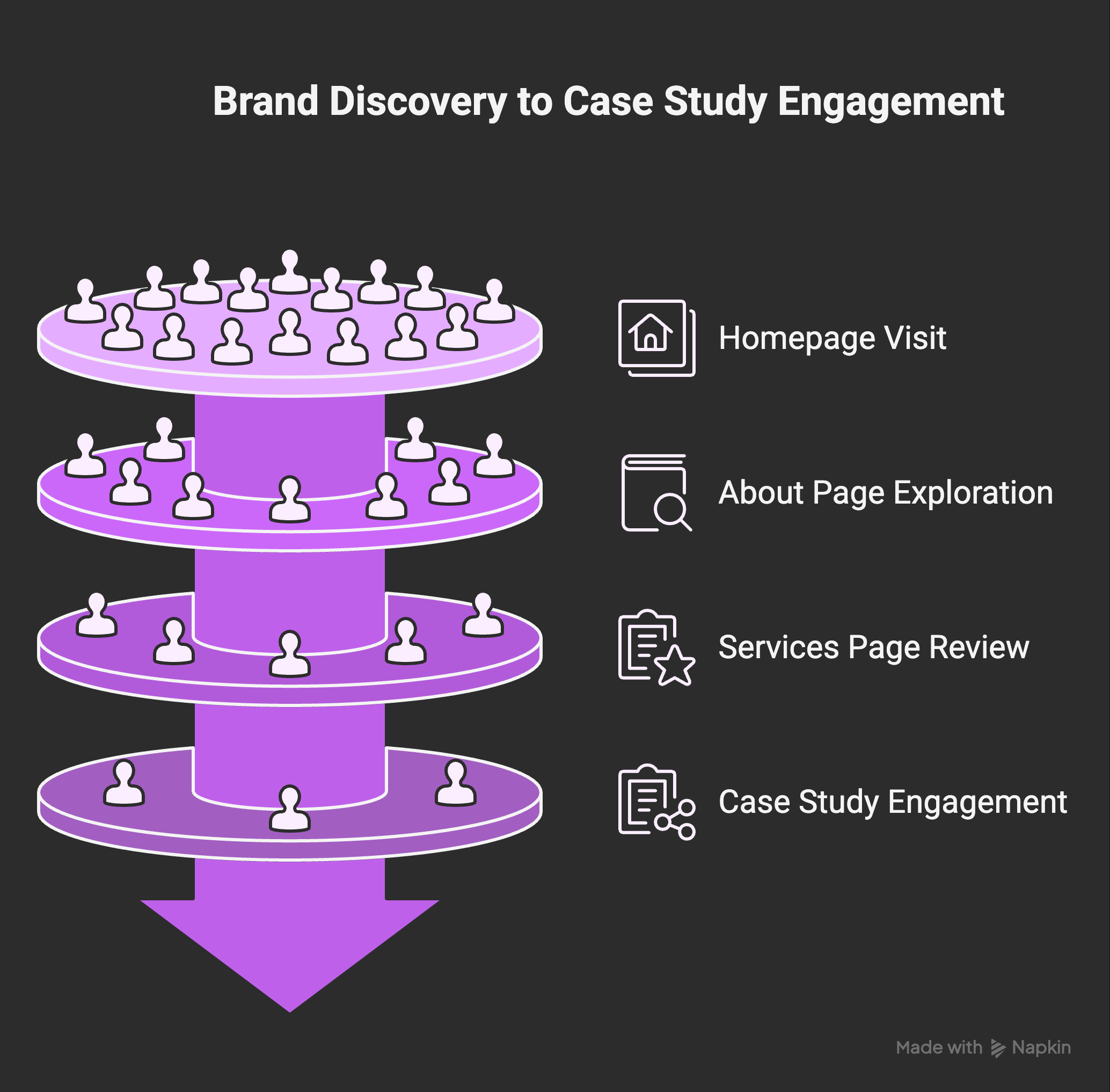
The case study is usually the pivot point.
It is the place where abstract claims meet concrete evidence.
If that evidence is thin, the buyer hesitates.
If that evidence is rich, the buyer relaxes.
And relaxed buyers move forward.
Trade shows interrupt attention.
Case studies support decision-making.
That distinction matters.
The Hidden Cost of Shows
The £20,000–£30,000 figure for a trade show stand is rarely the full picture.
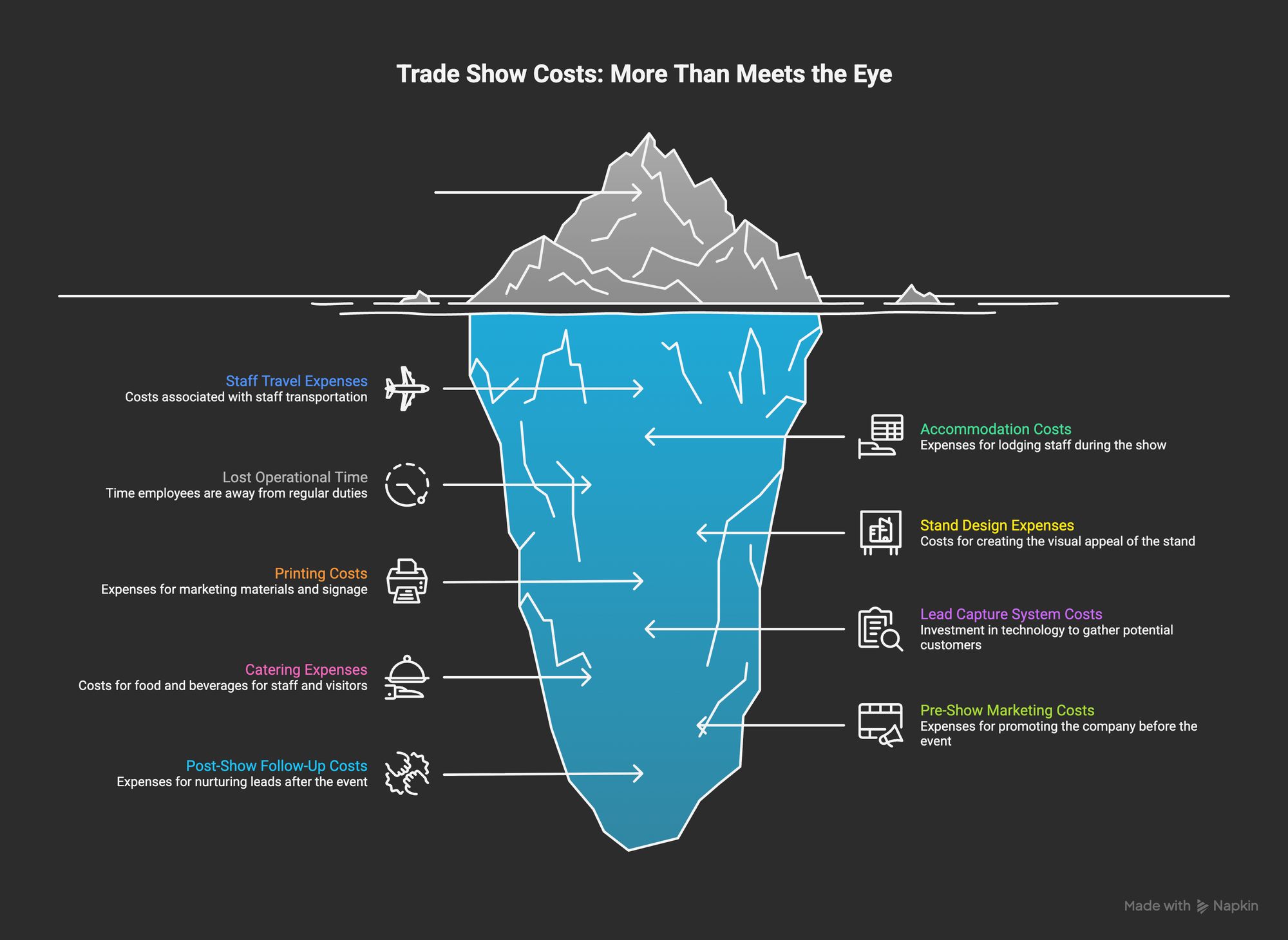
The real cost can climb quickly.
And what remains afterwards?
Some leads.
Some contacts.
Some photos.
Then the cycle resets for next year.
Case studies, by contrast, build on each other.
Each one adds another layer of proof.
Each one addresses a slightly different objection.
Each one strengthens your credibility footprint.
You are not resetting.
You are compounding.
The Emotional Core
There is another reason case studies outperform exhibitions.
Emotion.
When a customer describes:
- The anxiety before installation
- The technical challenge
- The moment something worked
- The relief of performance
- The financial return
- The lived experience
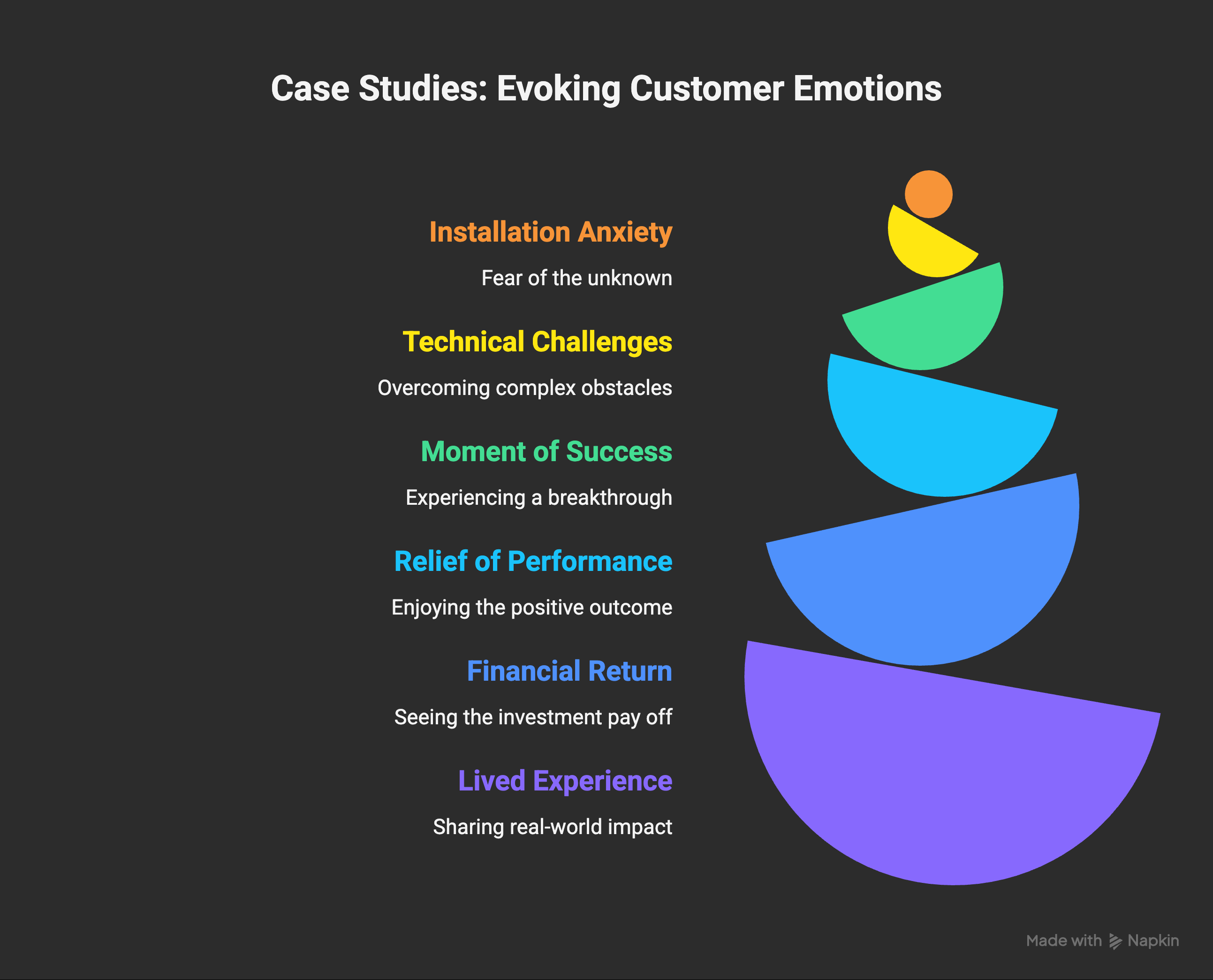
That emotion travels.
It resonates with prospective buyers experiencing similar doubts.
A stand cannot capture that.
A brochure cannot convey that.
A seminar cannot personalise that.
But a documented human story can.
Strategic Deployment
This is not an argument to abolish trade shows entirely.
Shows can:
- Signal presence
- Strengthen partnerships
- Support distributor relationships
- Create brand visibility
But they are not conversion infrastructure.
Case studies are.
The strategic shift is simple:
Instead of treating proof as a by-product of marketing, treat it as the foundation.
Instead of spending tens of thousands on three days of exposure, invest consistently in documented outcomes.
Instead of hoping conversations convert, provide evidence that closes.
The Decisive Point
In the end, most B2B decisions narrow to a simple question:
“Can we trust these people to deliver?”
Not:
“Did they have a large stand?”
Not:
“Did they sponsor the lanyards?”
Not:
“Were they visible at the expo?”
Trust is earned through demonstrated competence.
Case studies are demonstrated competence.
They are personal testimony.
They are problem resolution.
They are narrative evidence.
They are commercial leverage.
Price for price.
Pound for pound.
There is no contest.
You can rent attention for three days.
Or you can own proof for years.
The market will tell you which one compounds.
And as Ethan put it plainly:
“A stand at a show is dead money. Which one do you think I’m going to choose?”
If your goal is visibility, book a stand.
If your goal is revenue, build proof.
That is the difference.